
A great day out on the water starts long before you leave the dock – it starts with a boat travel plan. A boat travel plan is a single document that combines your route, timing, fuel stops, safety gear and passengers into an easy-to-understand outline you should refer to before you even untie your boat from the trailer.
Trip prep is too often treated like a packing list, but a proper boat travel plan tells the operator where the boat is going, which route it will follow, how long the trip should take, what conditions are acceptable for departure, what the boat and passengers need along the way and what to do if the original plan has to change.
Whether you're launching your own watercraft or picking up a rental for the day, we’ll explain how to plan your next boat trip from start to finish and turn a rough idea into a complete boating itinerary before you even leave your driveway.
What Is a Boat Travel Plan?
A boat travel plan is a written itinerary for a boating trip. It should record your destination, route, schedule, passengers aboard, vessel description, fuel needs, safety preparations, weather conditions, rest stops, emergency contacts and alternate destinations.
An overnighter with multiple stops definitely deserves a detailed itinerary, but even a short afternoon cruise should include destination, expected return time, an emergency contact ashore, a quick weather check and a description of your vessel.
Boat travel plan vs. route plan
A route plan answers the question of how you'll navigate to your destination. This includes all the navigable waterways, waypoints, depths, hazards, bridges, locks, channels, fuel stops and alternate landing areas you'll use to complete your trip without getting lost or running aground. You can think of this as the portion of your boat travel plan that answers "how" we get to our destination safely and it’s the foundation of any solid nautical route planner.
Boat travel plan vs. float plan
A float plan is what you share with someone back home. It gives that person a vessel description, who's aboard, where you're going, when you'll leave and return and what to do if you don't come back on time. The U.S. Coast Guard even suggests including a recent photo of your vessel so rescue operators know what they're looking for.
The route keeps you headed in the right direction. The float plan keeps someone else informed enough that they can take action if something goes wrong.
Boat Travel Plan Template: What to Include
Here's an overview of the trip information to include in your boat travel plan. Consider it your starting boat trip planner and float plan template in one.
Trip overview
Date
Primary destination
Purpose of the trip
Departure point
Planned departure time
Planned return time
Alternate destination
Latest safe turn-back time
Passenger and contact information
Operator name
Passenger names and numbers
Medical considerations or accessibility needs
Emergency contact ashore
Route and communications
Planned route
Names and arrival times for stops
Fuel or marina stops
Communication devices aboard
Which VHF channel you'll monitor, if applicable
Backup route and contacts
Emergency instructions
Many of these fields line up directly with the recommended trip planning information used across boating safety courses and U.S. Coast Guard recommendations.
Boat travel planning basics get a bit easier when you rent with Your Boat Club. Your fuel, pre-launch inspections and safety equipment are already maintained as part of your excursion so you can focus your planning time on the route and the fun parts of your trip. Still, that doesn't mean you should neglect building a boat trip planner as we highly recommend it.
Step 1: Decide What Kind of Boat Trip You Are Planning
How to plan a boat trip starts with deciding what kind of trip you’re taking.
Fishing, swimming, watersports, scenic cruising, waterfront dining, wildlife watching, or overnight camping all require different routes, schedules and sometimes boats.
Once you know why you're going, matching the destination to the right boat comes down to:
Passenger capacity
Water depth at your destination
Expected wave conditions
Distance from shelter if the weather turns
Gear or cooler storage
Watersports or fishing equipment
Whether the boat is approved for your planned activity
Boat type, capacity, location and applicable water conditions vary across Your Boat Club's fleet and options can change based on membership level, so browse our reservation system to start matching destinations to vessels.
Step 2: Map the Route & Build a Realistic Schedule
Choosing a destination then assuming you'll have enough time to get there later is a common mistake in casual trip planning. Instead, map your entire route then create a schedule with realistic buffers.
Identify the complete route
Use this list to mark your route before departure. Don't assume you'll find any of these details once you're on the water:
Departure point
Main channel or intended route
Waypoints
Destination
Fuel docks and approximate arrival times
Restrooms
Restaurants or marinas
Alternate stops where you feel safe pulling over
Return route
Use nautical charts for water navigation
General roadmapping apps are fine for towns and shoreside businesses, but that doesn't make them suitable replacements for actual boat route planning. Standard mapping apps aren’t navigation tools and shouldn’t replace an approved nautical or water navigation source.
Instead, use approved navigational charts for the waterways you'll use. The National Oceanic and Atmospheric Administration (NOAA) produces government-issued navigational charts that show charted depths, aids to navigation, hazards, shorelines and other details commonly used by recreational chartplotters.1 These charts are maintained and updated as navigation information changes, so they stay current. If you need a primer on reading charts or operating with a compass (rather than just a GPS), check out our guide to charts, compass and navigation.
Establish a return buffer
Factor in extra time for slowing down near the ramp, waiting for dock instructions, loading/unloading passengers and gear, fueling and check-out. These can often take longer than the actual boat ride.
Choose a turn-back time
Determine how late you'll allow yourself to stay at your destination before turning around. If you get there at 11:00 but won't start heading back until 2:00, write down 2:00 p.m. as your turnaround time. If you pass your planned turn-back time, there’s no graceful way to extend your trip.
Step 3: Check Weather, Tides, Currents & Water Conditions
Scanning current and expected conditions during your planning window is part of any thorough pre-departure boat checklist.
Check conditions at three stages
Several days before your trip
Evening before your trip
Before you depart
Use marine-specific forecasts
Coastal, offshore and Great Lakes boaters each have their own marine weather products through the National Weather Service. A standard weather app won't cover things like marine winds, wave heights, visibility, storms and hazardous waters – all things you'll likely want to know before heading out. This kind of marine weather planning should be a standing part of your prep.
Review tides and currents if applicable
Official tide prediction sources give you tide times and data about currents, water levels, and wind. Tides and currents matter for a recreational boating trip just like they do for commercial shipping or ferry routes.
Prepare for changing conditions
Rain gear, warm layers and sunscreen are essentials, as water temperature, wind exposure, sun intensity and weather patterns can change unexpectedly. A clear forecast in the morning doesn't guarantee the same conditions later in the day.

Step 4: Calculate Distance, Fuel and Stops
When you start your boat fuel planning, map your entire route first. Your total distance includes intended detours, sightseeing stops and the return trip. Plus, fuel consumption will change based on:
Boat and engine type
Load
Speed
Wind
Waves
Current
Towing/swimming activity
Idling and/or no wake operation
Your Boat Club has built conservative fuel guidelines and recommendations based on averages from each location and vessel type. But when in doubt, follow your vessel's guidance, rental instructions and listen to on-site recommendations rather than search for a one-size-fits-all fuel percentage rule online.
Verify fuel availability
Before you depart:
Know if fuel is available at each stop
Operating hours
Accepted payment method
If transient (rental) boats are served
Distance between fuel stops
Your rental boat will normally start with a full tank of fuel. Fuel availability and recharging rates can vary by marina and location, so double-check with your specific Your Boat Club location if you have questions or think you'll need more fuel than the original tank.
Step 5: Confirm Reservations, Rules, & Shoreside Logistics
Verify operator requirements
Different states and waterways require different knowledge, certifications, licenses, fishing permits and abide by local restrictions. If you're unsure if your boat license applies across state lines, read our simple guide on whether you need a boat license to rent a boat. For the most up-to-date information on specific boat operating rules, check out our boating rules & regulations page.
We've consolidated the boat rules for Minnesota, Wisconsin, Illinois and Florida in one convenient place, making it a handy boating safety checklist by state.
Confirm boat rental details
Before you think your boating vacation planner is complete, confirm the following:
Reservation date and shift
Pickup and return time
Approved operators
Passenger capacity
Security deposit or insurance requirements
Fuel policy
Pet policy
Items allowed/prohibited on board
Watersports allowed
Cancellation policy and inclement weather protocols
Confirm marina, dock, or ramp access
Ramp/pier opening and closing hours
Parking and trailered-boat access
Launch fees and after-hours departures (if your trip will run later than planned)
Save important phone numbers
Write down or bookmark the rental location, marina, emergency contact, destination, tow provider (if needed), reserved dock or dining reservation somewhere you can find it after leaving your house.
Step 6: Inspect the Boat & Safety Equipment
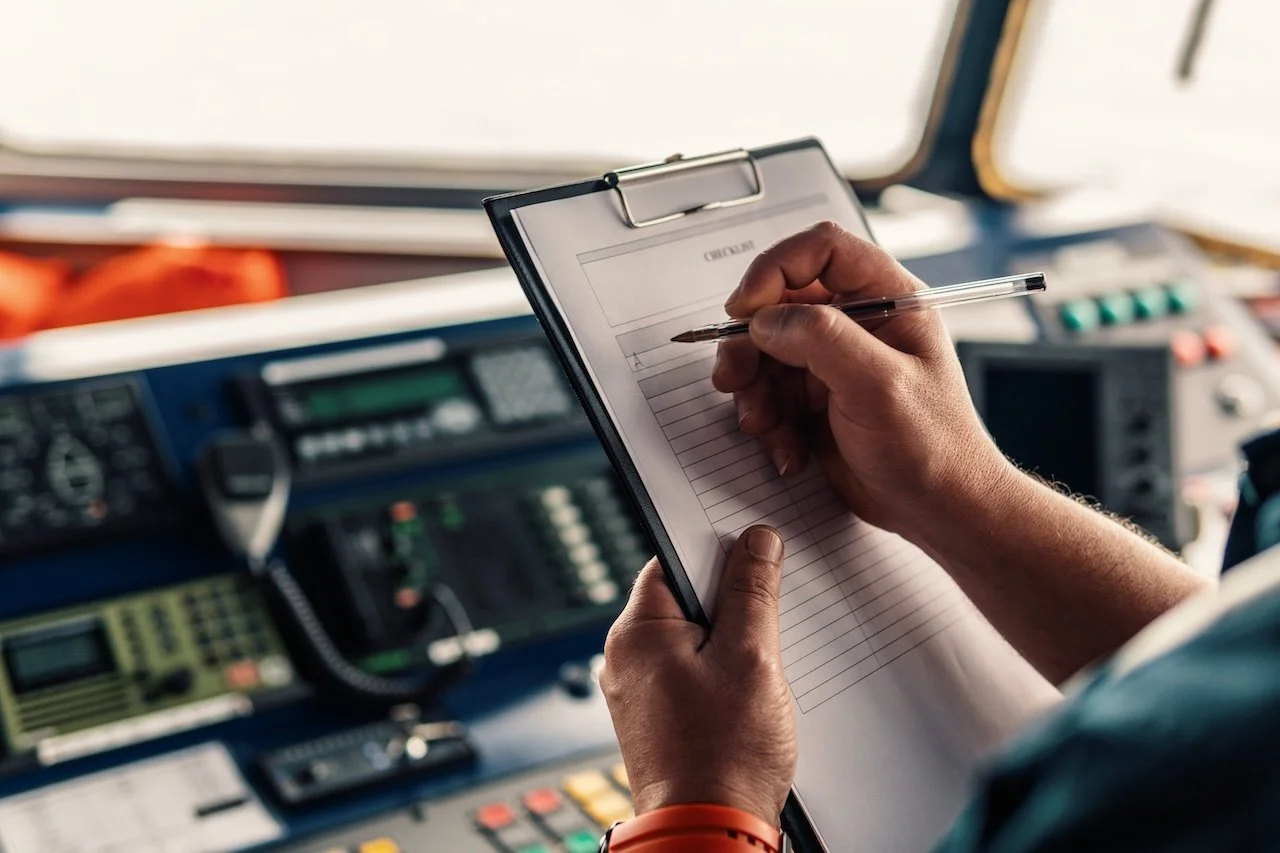
Running through a boating trip checklist before you leave the dock catches the small details that are easy to forget.
Complete a pre-departure boat check
Owned boats: Check fuel, engine and steering, batteries, bilge, navigation lights, dock lines and fenders, anchors and rode, propellers, fluid leaks, fire extinguishers and required documentation before you leave the dock. This is the backbone of any dependable boat rental checklist.
Rental boats: Have the operator walk you through the same checklist with their staff. Learn where everything is, identify the required safety equipment, verify existing damage (if any) and ask any questions before pulling away from the dock. At minimum, make sure every passenger has a USCG-approved life jacket that fits based on their size and the activity they’re doing. Life jacket categories have been updated, so don't rely on the old Type I, II and III labeling system to guess at fit.
Note for Your Boat Club renters: While adult-sized life jackets are provided on all boats, children's life jackets are not. Please plan on bringing your own appropriately-sized life jackets for younger passengers.
Locate all emergency equipment
Before departure, know where to find the fire extinguisher, sound-producing device, visual distress signals (if required by location), first-aid kit, throwable flotation device (if required by location), anchor and rode, navigation lights, bilge/bailing equipment, emergency engine cutoff device and tool kit (where provided).
Prepare navigation and communications backups
Keep a charged cellphone, waterproof charging device and hard-copy route information onboard in case your primary navigation methods fail. If your boat has a chartplotter, double check it's loaded with a current chart before leaving the dock. Also, keep a compass and VHF radio onboard when appropriate for your waterway.
Some mobile apps offer useful safety features and float-plan tools, but none of them are a substitute for a marine VHF radio.
Step 7: Create and Share a Float Plan
Don't skip this step as it's central to any real boat float plan.
A basic float plan includes:
Boat description/photo
Registration information
Operator and passenger names
Departure point
Route and stops
Destination
Expected return time
What communication devices you're bringing
What emergency equipment is aboard
Vehicle and trailer description, where required
What your shore contact should do if you don't return as planned
Share your float plan with a responsible adult who understands:
Your expected return time
How long they should wait before taking action
Who they should contact and what information to provide
Where you're going (bring your boat travel plan just in case)
Float plans preserve details that may be hard for your shore contact to recall accurately during an actual emergency. That's why a float plan needs to be written down and shared before your trip starts – it's the backbone of any solid boating emergency plan.
Step 8: Brief Everyone Before Leaving the Dock
Passengers aren't your crew, but a quick safety briefing can help reduce distractions.
Show passengers where safety equipment is stored
Before departing, walk passengers onboard and show them where you store life jackets, fire extinguishers, throwable devices, the first-aid kit, emergency communications and the engine cut-off device before hitting the water. Spending a few minutes at the dock can prevent a mad search.
Explain safe seating and movement areas on the boat
Set expectations:
Remain seated while underway
Don't obstruct the operator's view or access to controls
Stay out of prohibited bow seating areas
Never climb into the water while the engine is on
Assign simple crew roles
Where possible, identify who can call for help, throw the flotation device, manage a line, assist children or each other, or take the helm should the operator need relief. Passenger safety briefings during departure are standard practices.
Step 9: Pack Food, Water, Clothing and Personal Essentials
Any good boat trip packing list includes planning for hydration, food and sun protection – it covers most of what to bring on a boat trip in one pass.
Bring enough drinking water
Activity levels, sun exposure, heat indices and personal hydration needs are just a few reasons everyone should have more than enough drinking water on board. If anyone shows symptoms of dehydration, treat it as a serious medical condition and seek medical attention.
Choose healthy, easy foods
Stick with simple storage, low-mess foods and plan for dietary restrictions ahead of time.
Avoid glass containers
Avoid foods likely to stain or melt
Secure trash at all times
Don't assume grills or heating devices are allowed
Follow your specific location's policy
Pack for sun, wind, cold, rain
Remember to pack sunscreen, a hat, sunglasses, a UPF shirt and pants, rain gear, warm layers, towels, a dry bag and a change of clothes. Prescription medications, motion-sickness prevention, hearing or mobility devices and child supplies are all things to keep on hand as well.
Add overnight items only when applicable
If you’re planning overnight camping, don’t forget to include bedding, cooking supplies and toiletries. If it’s just a day trip you’ve planned, remember to not over-pack for your rental.

Step 10: Plan for Children and Passenger Comfort
Children will require additional planning around:
Properly fitted life jackets
Continuous adult supervision
Sun and heat protection
Snacks and hydration
Safe seating
Shorter trip stages
Restroom planning
Items to remember to bring for everyone:
Sunscreen
Hat
Sunglasses
UPF clothing
Rain gear
Warm layer
Towels
Dry bag
Change of clothes
Break your cruising into shorter legs between fun stops so everyone gets the chance to move around and stretch. For more ideas, Your Boat Club's guide to 15 tips for safe boating with kids covers additional ways to keep younger passengers safe and comfortable. Most of these comfort tips focus on children, but consider each recommendation for every passenger. Slow down, take more breaks and be honest with yourself about whether every member of your party is suited for the planned activity.
Final Boat Travel Plan Checklist
Now it’s time to review your day boat trip checklist. Use the table below as your boat trip planning checklist which gives you a quick-glance summary of everything covered in the ten steps above.
| When | Planning Tasks |
|---|---|
| Several days before | Pick route, reserve boat, check credentials, confirm passengers, research docks and fuel |
| Day before | Review weather, tides, route, packing, float-plan details, and Plan B |
| At home before leaving | Charge devices, pack water and gear, share preliminary plan |
| At the dock | Complete walkthrough, confirm fuel, locate safety equipment, review local conditions |
| Before getting underway | Brief passengers, send final departure time, check route and return deadline |
| During the trip | Monitor position, time, weather, passengers, and fuel |
| After returning | Check in with float-plan contact, complete rental return, remove gear and trash |
Start Your Next Boat Trip With Your Boat Club
Pre-trip planning makes a good day out perfect. Finding the right boat for your passengers and activity is built into Your Boat Club's simple reservation system so you can focus on the trip itself. Select a location, pick a boat that fits your passengers from our fleet, then review your rental info before you reserve.
Here's an example day-trip itinerary that plans for just about everything:
Departure: Your Boat Club marina at 9:00 a.m.
Primary destination: Protected swimming area
Lunch Stop: Marina restaurant
Turn-back time: 3:30 p.m.
Required return time: 5:00 p.m.
Before you finalize your plan, double-check our rental FAQ page and boating rules and regulations pages.
Frequently Asked Questions About Boat Travel Plans
What’s the difference between a boat travel plan and a float plan?
A boat travel plan is a complete itinerary for your boating trip. A float plan is a safety document you leave with someone onshore before your trip.
What information should I include in my boat travel plan?
At a minimum, your destination, route, when you'll leave and return, where you'll get fuel, who's coming, a safety equipment overview and a printed float plan left with a trusted contact.
Who should I leave my float plan with?
Leave your float plan with a trusted adult who knows when you'll return, has permission to act on your behalf if you don't and can accurately describe your vessel and passengers to rescue officials.
Do I need a float plan for a day boat rental?
Yes. Plan for your destination, expected return time and have a contact get emergency help if you don't check in.
How do I calculate travel time by boat?
Allow for your total distance, operating speed, no-wake zones, locks, currents, planned stops and a buffer for returning.
Can I use Google Maps for my boat route?
Yes, for towns and points of interest on land. Google Maps is not a navigation tool and should not be used as a substitute for approved water navigation resources.
How far in advance should I plan a boat trip?
A weekday afternoon cruise can be planned the week of your trip. Overnight trips, complex routes and excursions that require reservations should be planned at least one week in advance.
What should I do if the weather changes?
Head back to your backup destination, notify your contact and follow the directions of local officials.
What should I double-check when renting a boat?
Passenger capacity, operator requirements, fuel policy, when you need to return the boat, location-specific rules and whether your planned activities are allowed. Build these checks into your boat travel plan so you don't forget before your trip.
Sources:
National Oceanic and Atmospheric Administration. “Where do I get NOAA nautical charts?” https://oceanservice.noaa.gov/facts/find-charts.html Nov. 26, 2024. Accessed July 30, 2026
