Used Boat Buying Guide: What to Check Before You Buy
Buying a used boat can save you thousands of dollars and many headaches down the river if you know what to look for. This includes accurately evaluating a boat's condition and maintenance history, determining true ownership costs, and knowing how to verify paperwork. Skipping any of these steps and that “bargain” could become your biggest regret. But don’t worry, this used boat buying guide will take you through everything you need to know on how to buy a used boat the right way, from inspection, to asking the right questions, to verifying all details before you write that check. Plus, if you’re not sure what you want yet, check out all of your options at Your Boat Club before making a final decision.
Start with Your Boating Goals
Decide How You'll Actually Use the Boat
Start by deciding how you’ll actually use the boat. Will it be for fishing, watersports, cruising, entertaining, or long-distance travel? Your intended use should determine the type and size of boat you consider. For instance, a 17-foot aluminum fishing boat and a 24-foot tritoon are both used boats but have vastly different applications.
Consider how many passengers you'll have, seating and storage requirements, and what features are important to your time spent on the lake when considering a pre-owned boat.
Match the Boat to Your Water and Lifestyle
A boat ideal for tiny inland lakes would be wrong for big choppy lakes, offshore fishing, watersports, or overnight use. Consider where you’ll operate first. Many families cruise around calm lakes in used pontoons. Runabouts and ski boats usually do well on mid-sized recreational lakes. Big water or fishing-specific use requires larger cabin cruisers or center consoles.
Consider Renting or Joining Before Buying
If you’re unsure what type of boat fits your lifestyle, rentals or a boat membership can help you test different options before committing to ownership. Trying pontoons, ski boats, or fishing boats firsthand can make the buying decision much easier.
Set a Realistic Used Boat Budget
Look Beyond the Purchase Price
The listed price is only the beginning. Boat ownership costs include fuel, insurance, storage/marina fees, winterization/de-winterization, trailer registration/maintenance, cleaning supplies, safety equipment, and yearly servicing. Budget realistically and consider the whole picture before putting in your offer.
Plan for Repairs and Maintenance
Boats age, and particularly older boats that lack full service records can end up costing you money if you need to contract out repairs, upkeep, and improvements. A seemingly great price of $8k turns into a liability when the engine requires repairs, the upholstery is falling apart, and the trailer tires are cracked. Every seasoned boater has used boat buying tips, and the universal truth is this: budget for repairs on top of the asking price, and don't fall in love until you've thoroughly inspected the vessel.

Compare Buying vs. Renting vs. Membership
Before you commit to buying, consider how often you'll actually get on the water. Use the table below to compare your options:
| Option | Best For | Things to Consider |
|---|---|---|
| Buying used | Frequent boaters who want ownership and want to go out every Saturday | Maintenance, storage, and insurance |
| Renting | Occasional boaters | No long-term ownership costs |
| Membership | Frequent access without full ownership. Best for those who need more flexibility in their schedule. | Monthly or seasonal commitment |
If you're on the fence, check out our boats available for rent today, or browse our membership options to see whether a more flexible arrangement fits your lifestyle and budget better than full ownership.
Inspect the Hull, Deck, and Exterior
Check for Cracks, Soft Spots, and Repairs
The hull is the foundation of any boat, so give it your closest scrutiny. Check for spider cracks, deep gouges, poorly matched or patched gelcoat, irregular repair lines, and any soft or spongy spots in your used boat inspection. Large impact cracks, hull sections that flex when pressed, and multiple patches are deal killers. Press your thumb firmly into the deck and hull. Check to see if water has penetrated the laminate or delamination has occurred.
Look Closely at the Transom
A boat's transom (the vertical back wall where the engine is mounted) is subject to incredible torque and stress with every run. Damage to the transom is one of the costliest repairs on any used boat. Look for stress cracks, evidence of moisture around through bolts and hardware, any softness when you push firmly against it, or movement when the engine is rocked up and down. A soft or failing transom may cost you more than the entire value of the boat to repair.
Do a Quick Walk-Through
Look at through-hull fittings for corrosion or evidence of new sealant covering issues during any used boat walk-through. Check the hull-to-deck joint for gaps, cracking, or separation. Open all hatches and compartments – odors of mildew or must indicate water intrusion and possible chronic moisture problems. Examine visible wiring: DIY electrical work with improperly matched tape – exposed connections or suspicious routing could indicate alterations made by someone without knowledge of electrical codes. Double check that the battery is secure and corrosion free as well.
Use the exterior inspection checklist below as a reference during any boat inspection checklist walk-through:
| Area | What to Check |
|---|---|
| Hull | Check for cracks, deep gouges, mismatched gelcoat, and soft or spongy spots. |
| Transom | Press firmly. There should be no movement, stress cracks, or moisture around hardware. |
| Deck | Walk every inch and listen for hollow flexing or soft areas. |
| Through-hull fittings | Inspect for corrosion, fresh sealant, or gaps at the hull-to-deck joint. |
| Interior/bilge area | Check for mildew smell, water stains, amateur wiring, and a loose battery. |
| Trailer | Inspect tires, lights, bunks, rollers, bearings, rust, and registration. |
Inspect the Engine and Mechanical Systems
Ask About Engine Hours and Service History
Engine hours tell part of the story, but boat service records tell the full one. A well-maintained outboard or sterndrive with 400 hours may be far more reliable than a neglected engine with 150 hours. Ask for documentation showing oil changes, spark plug and fuel filter service, winterization and de-winterization, and any major repairs. A seller who can hand you a folder of service records has taken care of their investment. A seller who shrugs and says they "just ran it" is a much riskier proposition.
Look for Mechanical Red Flags
Watch for oil leaks, corrosion, cracked belts or hoses, milky oil, rough idling, vibration, knocking, or hard shifting during startup and on the water trials, if this is an option. During startup, a rough idle, hard shifting, vibration, knocking sounds, or unusual exhaust smells all warrant a deeper look by a qualified marine mechanic before you proceed with a private seller boat purchase.
Inspect the Propeller and Running Gear
Pull the boat out of the water if possible and check the propeller for bent blades, deep nicks, uneven edges, or significant damage. Also look at the skeg (the fin below the lower unit) for cracks or bends that indicate the boat hit something underwater. Underwater impact damage may extend beyond what's visible on the prop.
Check the Electrical System, Bilge, and Safety Equipment
Test Electronics and Wiring
Work through the full electrical system during your used boat inspection. Turn on navigation lights and confirm all are working. Test the bilge pump manually and verify it responds correctly to automatic float triggers. Check the horn, all gauges, the GPS or chartplotter, fish finder, VHF radio, and audio system. Inspect battery terminals for corrosion and confirm the battery holds a proper charge. If any electronics are non-functional, get a repair estimate before you agree on a price.
Inspect the Bilge and Pumps
Open the bilge and take a good look. A clean, dry bilge suggests a well-maintained boat. Standing water, oil sheen, debris, or a non-functional bilge pump all suggest ongoing problems or neglect. A failed bilge pump is also a safety issue, since it's your first line of defense if water enters the hull unexpectedly. Ask when the pump was last tested and whether it's been replaced.
Review Included Safety Gear
Confirm the boat includes the safety equipment required for your region and boat size: properly rated and unexpired life jackets for every passenger, a functioning fire extinguisher, anchor and lines, visual distress signals, and a working bilge pump. Safety equipment that's expired or missing adds to your cost of ownership and may create compliance issues. This is especially important if you're buying a used boat for family use on public waterways.
Review Upholstery, Storage, and Interior Condition
Interior Wear Can Reveal How the Boat Was Treated
The interior condition of a pre-owned boat tells you a lot about how the previous owner treated it overall. Look for cracked or brittle vinyl, loose or wobbly seat bases, mold or mildew odors embedded in foam cushions, water stains on carpet or flooring, damaged or warped hatches, and storage compartment doors that don't close properly.
Don't Ignore Comfort Features
Before finalizing any used boat purchase, sit in the seats and walk the deck. Check whether the seating layout works for how you plan to use the boat, such as entertaining, fishing, watersports, or relaxing. Evaluate shade options, storage for gear, boarding ladders, cup holders, audio system quality, non-skid flooring condition, and overall layout. Make sure the layout, storage, and seating match how you plan to use the boat.
Don't Forget the Trailer
Inspect the Trailer Like Part of the Boat
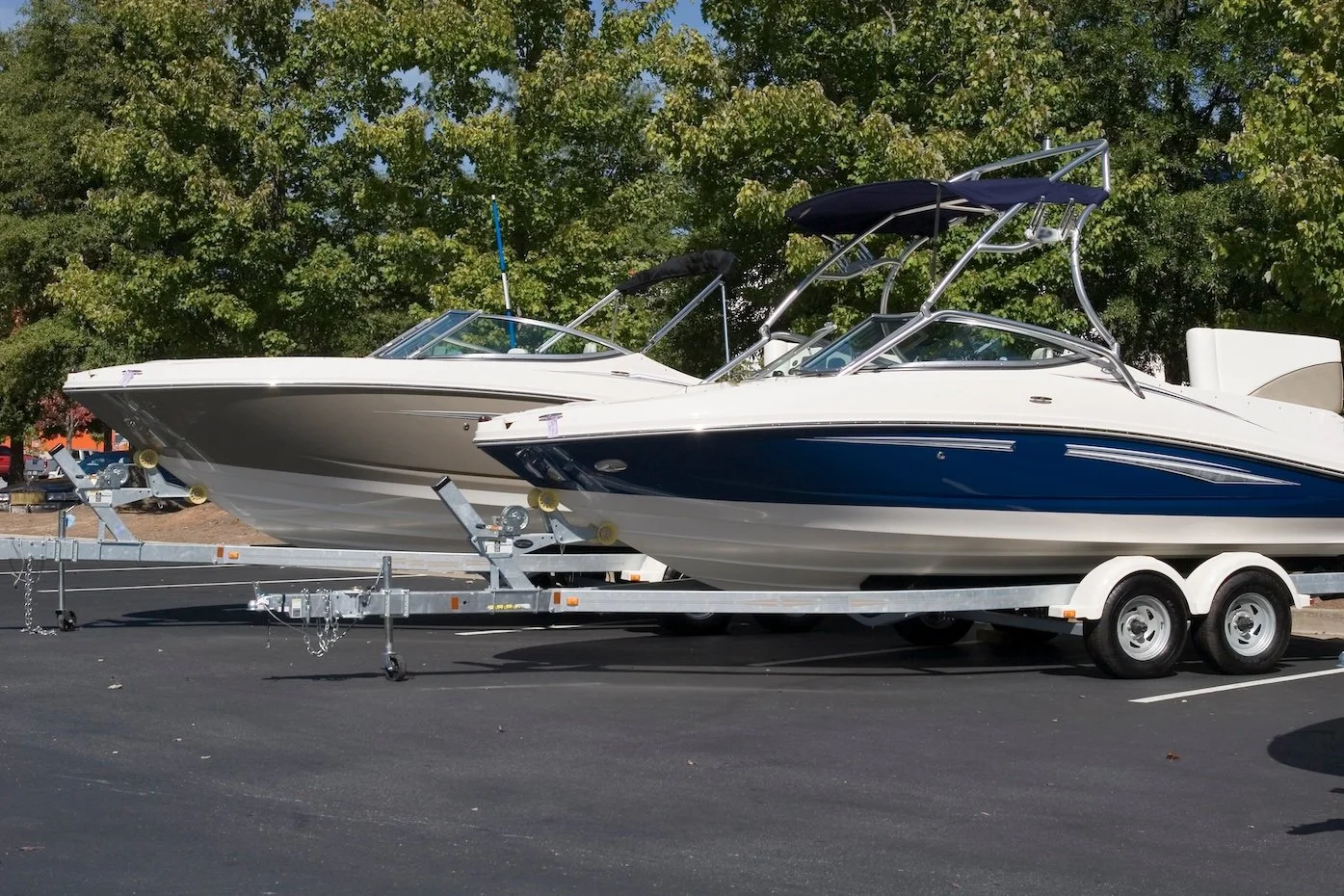
If a trailer is included in the sale, treat it as an integral part of the used boat checklist rather than an afterthought. Check tire condition and tread depth, confirm there's a spare, and test all trailer lights and wiring. Look for heavy rust on the frame, rollers, or bunks. Note that surface rust is common, but deep corrosion that compromises structural integrity is a problem. Spin the wheels and listen for rough wheel bearings. Confirm whether the trailer has functional brakes if required for its weight rating, and verify the trailer registration is current and transferable.
Ask for Service Records and Ownership Documents
Review Maintenance and Winterization Records
Boat service records are one of the strongest indicators of a used boat's actual condition. Ask for documentation that covers oil changes, impeller replacements, battery replacements, fuel system service, winterization, de-winterization, and any major engine or structural repairs. Gaps in the service record, or no records at all, should factor into your offer price and your comfort level with the purchase. A well-documented maintenance history is a green flag; the absence of any records is a yellow one.
Confirm the Title, Registration, HIN, and Liens
Before any money changes hands, verify the boat title is valid and free of liens. Know how boat titles transfer in your state works before you sign on the dotted line. Find the Hull Identification Number (HIN) on the transom and verify it matches paperwork exactly, letter for letter. Run a USCG documentation lookup or use a third party service to search for outstanding liens or legal judgments against the vessel.
Get the Sale Terms in Writing
Put all sale terms in writing, including the agreed purchase price, included equipment, trailer details, deposit terms, and any inspection or sea trial contingencies. Written documentation protects both buyer and seller and helps prevent disputes after the sale.
Take It On The Water If You Can
Test the Boat on the Water Before Buying
A boat sea trial is a strong recommendation so you can run the boat on water under real conditions. Cold startup response, idle quality, acceleration/throttle response, steering/heave compensation (feel), trim tab operation, gauge readings at idle/walk around/fast rpm, operation of electronics, pumps and blowers should all be checked on sea trials. Excessive vibration and overall performance under load/full speed should also be tested.
Bring a Mechanic or Surveyor When Needed
For higher-value purchases (typically boats in the $30,000-plus range) hiring a marine surveyor is money well spent. A professional surveyor can provide a full condition and valuation survey, identify problems you might miss, and in some cases is required by a lender before they'll approve financing. You can find service experts who can advise on what to look for in a used boat inspection for your region and boat type. Knowing what to look for when buying a used boat is just as important as knowing when to walk away.
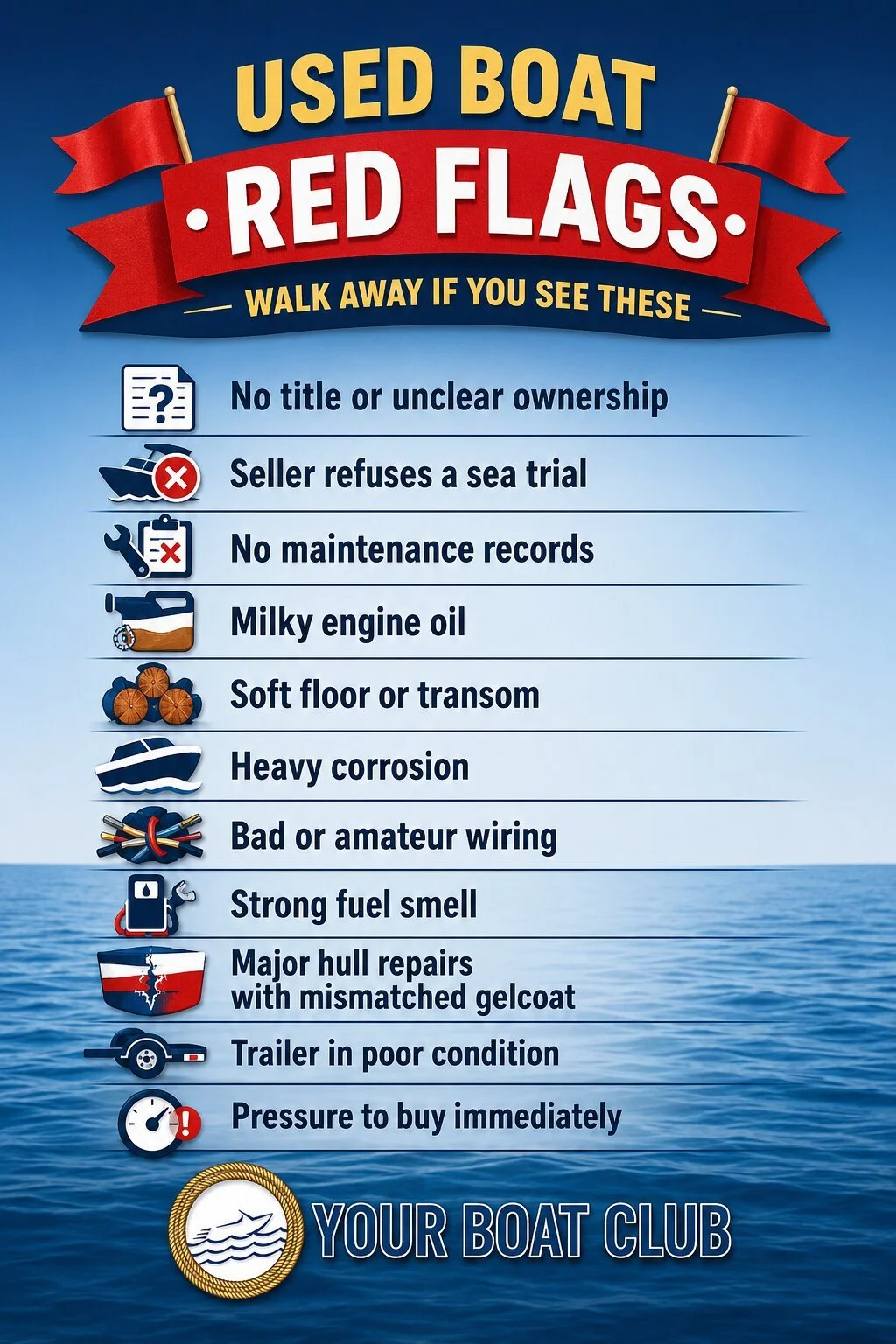
Used Boat Red Flags
If any of the following appear during your evaluation, slow down or walk away. The goal isn't just finding the lowest price, but finding a boat that fits your needs, budget, skill level, and maintenance comfort zone.
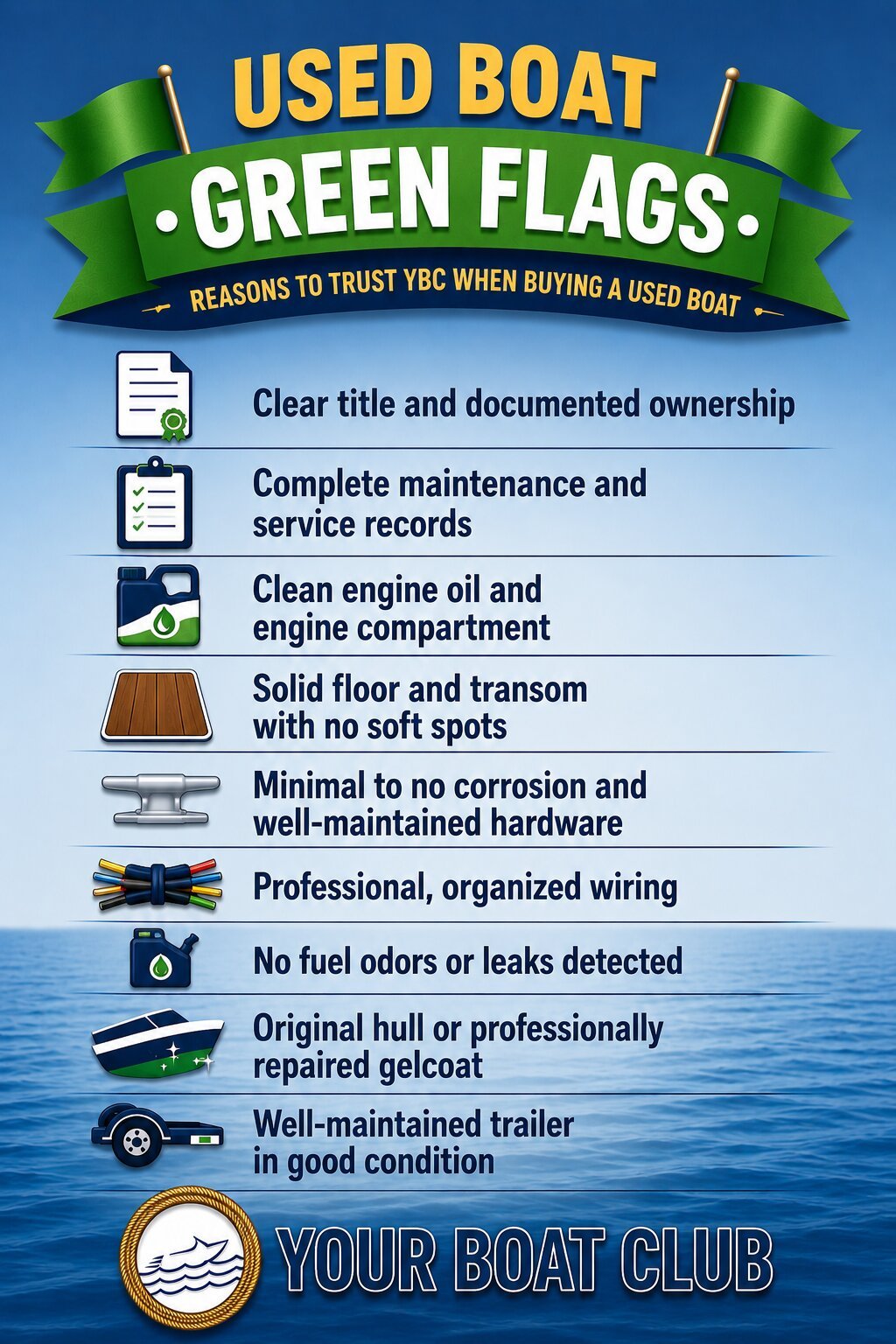
Why Buying from Your Boat Club Can Reduce the Guesswork
Late-Model Boats with Known Maintenance History
Most used boat buying tips concentrate on what to watch out for when shopping. Your Boat Club eliminates a lot of that risk. Boats offered for sale through us are late-model fishing boats, ski boats, and used pontoons that have spent their previous lives in our active clubs being regularly detailed and refurbished to meet our members’ high standards and maintained according to a documented service schedule.
When you buy a pre-owned boat from Your Boat Club, you get to know the full history of your boat.
Talk to Boating Experts Before You Buy
If you’re ready to buy a boat now, the Your Boat Club team is here for you. Browse our available locations to see if there’s a club near you, review our full fleet, or get in touch directly with questions about what’s available. Not ready to buy? Try out a few different types of boats through rentals or membership first.
Whether you purchase a boat from an individual or a boat dealer, the inspection process should be the same. So now that you know how to buy a used boat, start by identifying your goals and researching the conditions and paperwork of the boat you want. If you’re buying a boat through Your Boat Club or from a private seller boat purchase elsewhere, the steps in this guide will help you make a confident and informed decision so you can get on the water with no regrets.