Stepping onto a boat comes with an implied promise to slow down. Gentle waves, wide-open horizons, and a lack of everyday distractions create an environment that practically begs you to take a breath and enjoy the moment. Add in a yoga practice, and you have a simple way to connect movement, balance, breath, and mindfulness to time spent cruising. Yoga on a boat doesn't have to be complicated or require an instructor. It can be as simple as five minutes of uninterrupted stretching on a tranquil deck before everyone else is awake or as in depth as a week-long floating yoga retreat with plenty of time for cruising, meditation, swimming, and journaling.
A successful and safe session requires the boat to be anchored or docked before practice begins. Never attempt to half-busy yourself between leading a class and watching Mother Nature at work, as weather patterns, water traffic, passengers' safety, and local maritime rules always come before savasana. With that being said, there's something special about incorporating your practice on deck. Yoga on a boat can really liven up any lake day, whether you're going for a wellness retreat on the water or a peaceful morning of asanas at sea.
Benefits of Yoga on the Water
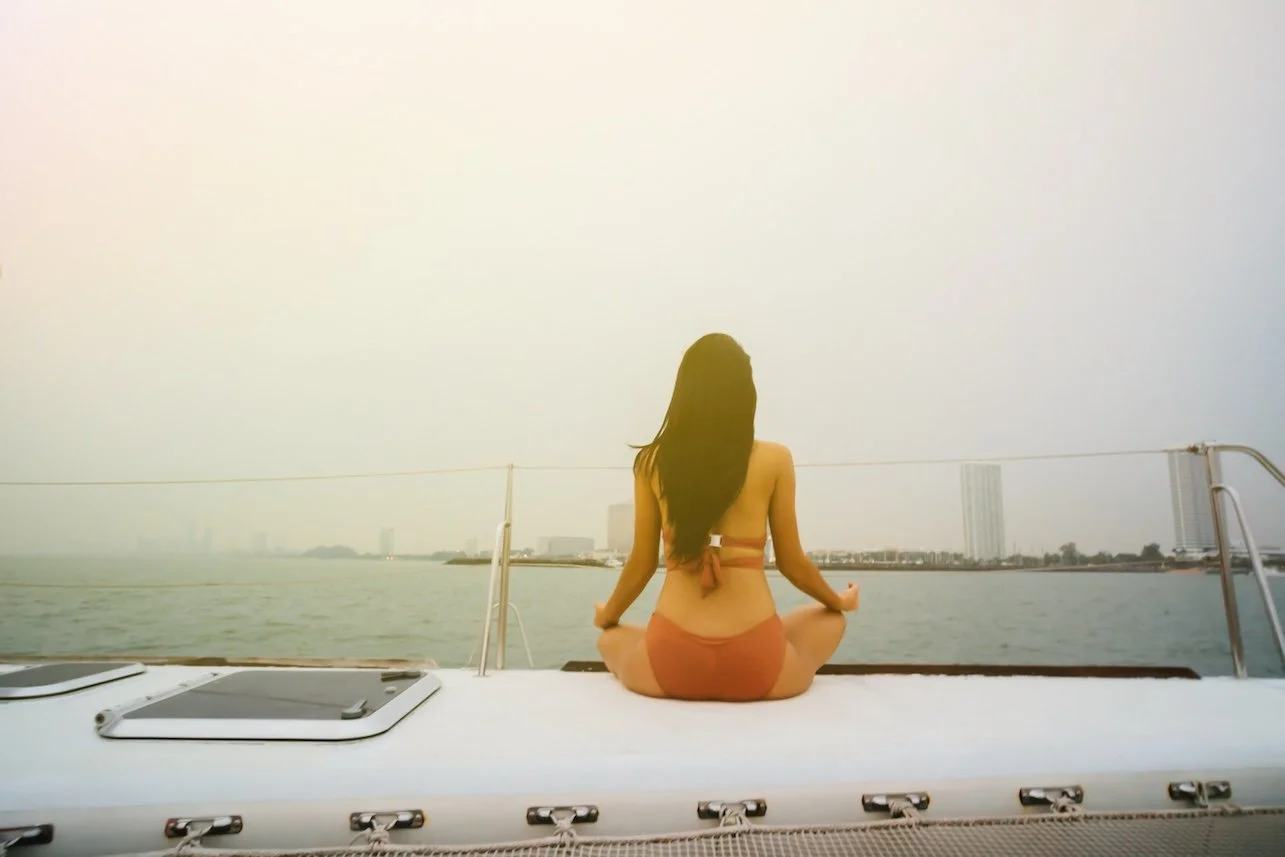
Yoga classes are typically practiced indoors. Mirrored walls, studio lighting, and recorded music are pretty standard. However, our surroundings and perspective change on the water, as sunlight reflects and waves offer white noise in place of your Spotify mix. Yoga by the water swaps predictable studio classes for something that’s altered by the light, wind, and tide. That adjustment can also make it easier to concentrate on your breath and movement because your other senses are occupied by relaxing elements rather than traffic and city noise. Practicing mindfulness on the water can actually feel effortless.
Another bonus of spending your day on the boat is the built-in excuse to unplug from your phone, email, and never-ending to-do lists. When it comes to boating for mental wellness, it’s as simple as changing where you place your attention. Notice how light hits the water or watch how the lake rocks your boat instead of what cares you have back home.
Plenty of other benefits include:
Gentle movement
Improved mobility
Stress relief
Mindful breathing
Sense of community
Connection with nature
Just remember that yoga on a boat isn't a replacement or alternative form of medical care. It shouldn't be used to treat health conditions, but rather as a form of complementary wellness that many people find soothing and rejuvenating.
Note as well that balance will feel different on a boat, even if conditions are calm. Rocking of the deck, however slight, can easily disrupt poses that can otherwise seem effortless on dry land. For this reason, boat wellness activities should focus on slower, controlled movements rather than poses that have a risk of toppling the participant. This guide to the therapeutic benefits of being on the water goes into more detail.
How to Plan a Yoga Boating Retreat
Whether you're organizing a solo cruise or gathering friends for a boat yoga retreat, a successful outing starts with at-home planning. First, figure out who the retreat is for and what you want to accomplish. Solo trips may emphasize meditation and restorative poses, including deep stretching, focused breathing, and alone time. A group voyage might include a guided lesson, nutritious snacks or lunch on board, swimming, and a scenic cruise back to shore as part of a balanced menu of yoga retreat activities.
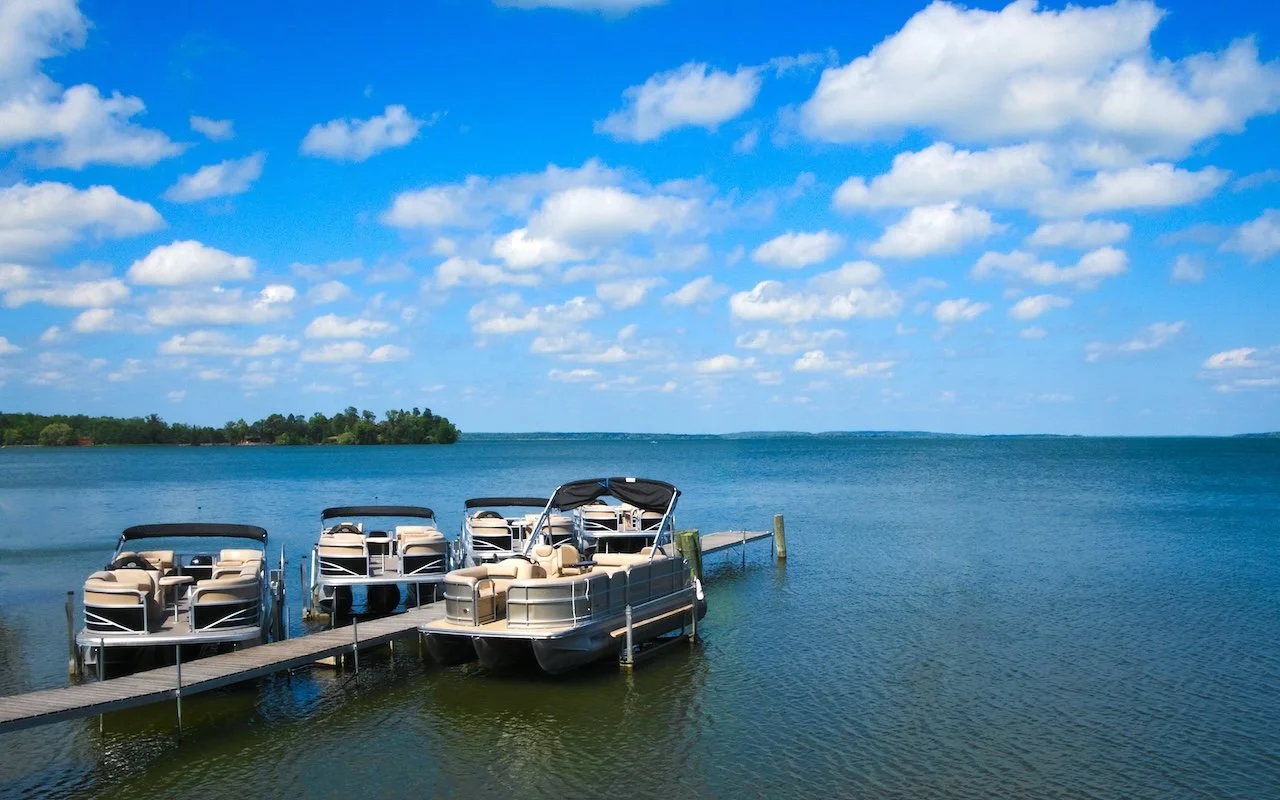
Once you've determined your audience and goals, a pontoon boat is typically the best choice for yoga on the water. Try to find a boat for yoga with plenty of non-slip room on the deck that comfortably fits your group size and all of your gear. Always stay within passenger and weight capacity limits, even if it seems like the group would benefit from more space during a session.
Keep your morning leisurely with:
Early departure (when boats and waters are typically least crowded)
Cruising to a private, legal location
Docking or anchoring for the day
Starting with seated breathwork and basic stretching
Slowly easing into desired poses
Taking time for hydration, snacks, or meditation
Docking before the afternoon rush/winds
If you’re looking to add an instructor, verify their credentials, insurance, liability on the cruise, and if the planned session will be safe for everyone on board. They can also make suggestions on which of our water yoga ideas are best suited for a boat as some poses and flows don’t mix well with an unintentional rocking motion.
If you don’t have your dream itinerary built out quite yet, renting a boat for the day is a great way to try a yoga boat trip before planning a longer adventure. Struggling with the other logistics? Check out these tips for planning a boating getaway.
How to Equip Your Boat for a Yoga Session
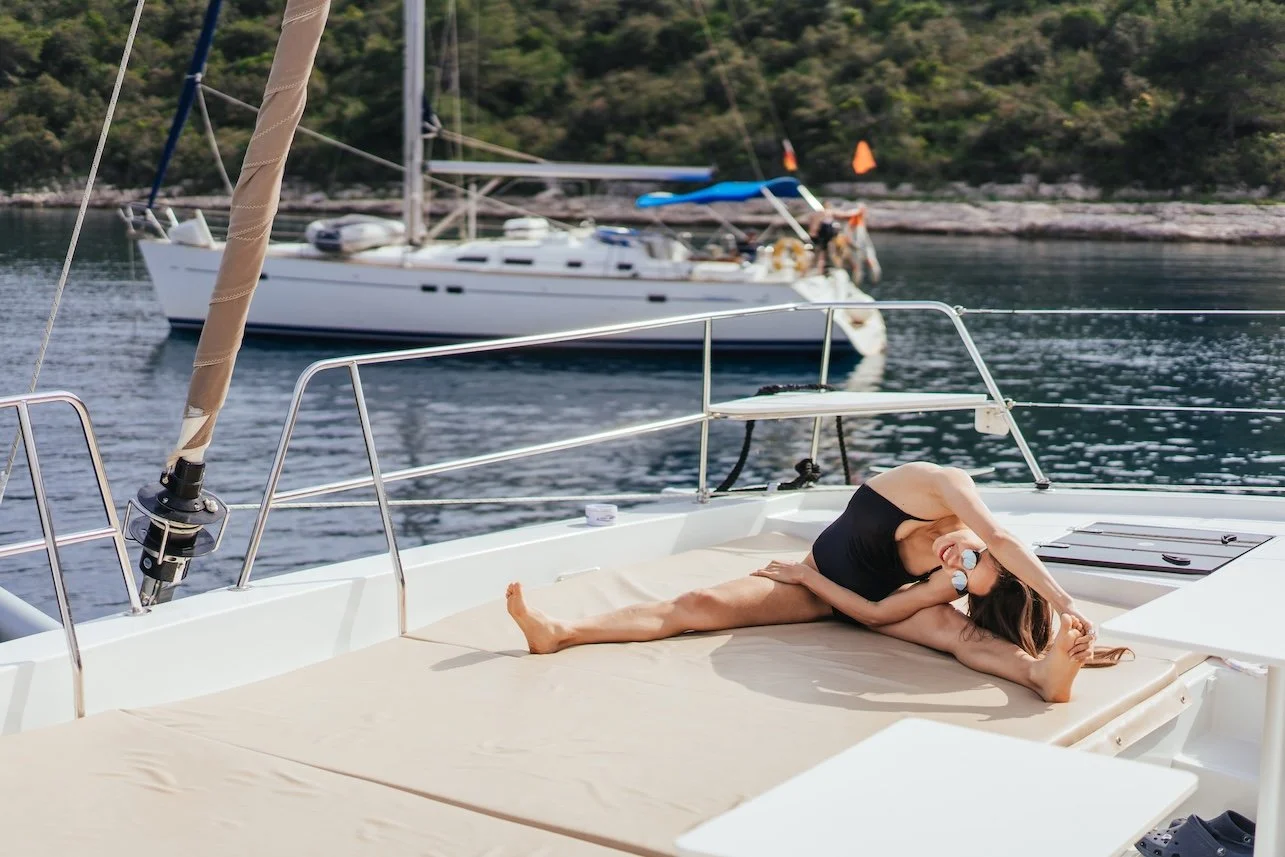
Safety and comfort are priority number one. Non-slip mats should be sized to accommodate your group without hindering walkways, hatches, operating controls, or safety equipment. Here are a few suggestions:
Non-slip yoga mats
Towels
Water bottles
Sunscreen and sunglasses
Layered clothing
Dry bags
Waterproof phone cases
Cushions or lightweight blankets
First aid kit
Safety vests and flotation devices should always be available to anyone aboard. Secure all gear so it doesn't shift or fall off in unexpected conditions by stuffing towels into backpacks, or clip bottles to the deck so they don't roll away. Leave candles, glass containers, fire pits, incense, and other flammable items at home.
As for clothing, think about movement and water conditions. If you’re swearing by bare feet yoga, bring along some socks or sturdy shoes for boarding, docking, or touching hot surfaces on the deck. Want to play music? Keep the volume low enough for everyone to hear boats nearby, weather alerts, or instructions from the captain. No matter what you do on your boat, this list of essential boating safety gear can help you determine what should always be onboard.
Ideal Quiet Spots for Water Yoga
Rather than suggesting actual locations that may change over time and regulations that vary by locale, let's discuss characteristics of ideal places for a lake yoga session. Calm backwater coves, protected bays, designated anchoring areas, and quiet marina slips are all good places to begin your search. Sheltered spots near the center of a lake that don't have much wake are also ideal. The right spots should have deep enough water to anchor safely without scraping, legal places to anchor away from traffic, and easy enough access to land (or emergency vehicles should you need them).
Avoid boat channels, open shorelines, narrow passages, heavy currents, crowded sandbars, fisheries, wildlife sanctuaries, or anyplace where anchoring is prohibited.
Time of day matters just as much as location. Weekday floats and morning yoga on the boat also tend to avoid crowds of traffic, busy boats, and choppier water. Avoiding pop up storms is key too, so triple-check conditions before heading out. Learn about your designated launch zone, as rules may be different based on what lake, river, or coastline you're floating in. You can always check out boating locations to search places near you and learn about boating rules and regulations by state.
Top 6 Yoga Poses to Try on a Boat
Safe yoga poses on a boat are slow, low to the ground, and relatively easy to modify depending on how the boat shifts. Each pose on this list should only be practiced while the boat is docked or anchored, with plenty of room for students to move around freely. Stop practicing immediately if water conditions become rough or difficult.
1. Easy Seated Pose
Sit on your mat with your legs crossed and hands resting on your knees. Use this position as an opportunity to bring attention to your breath or warm up before moving into more active positions. It's perfect for boat yoga since it allows your body to keep a low center of gravity.
2. Seated Side Stretch
Remain seated and place one hand on your hip. With your opposite hand, slowly raise your arm overhead and lean toward the side your hand is supporting. Repeat on the opposite side. This stretch helps open up your shoulders, ribs, and side body without having to stand or balance.
3. Cat-Cow Stretch
Come onto all fours with your wrists below your shoulders and knees below your hips. Gently alternate between dropping your belly towards the floor by rounding your back and lifting your chin towards the ceiling by arching your back. Since Cat-Cow maintains the majority of your weight on the ground, it's great for warming up without worry of toppling over.
4. Child's Pose
Sit back with your hips on your heels from your knees and stretch your arms forward, palms up or down, or let them rest alongside your body. Another use for Child's Pose is as a place to rest if your boat suddenly rocks.
5. Low Lunge
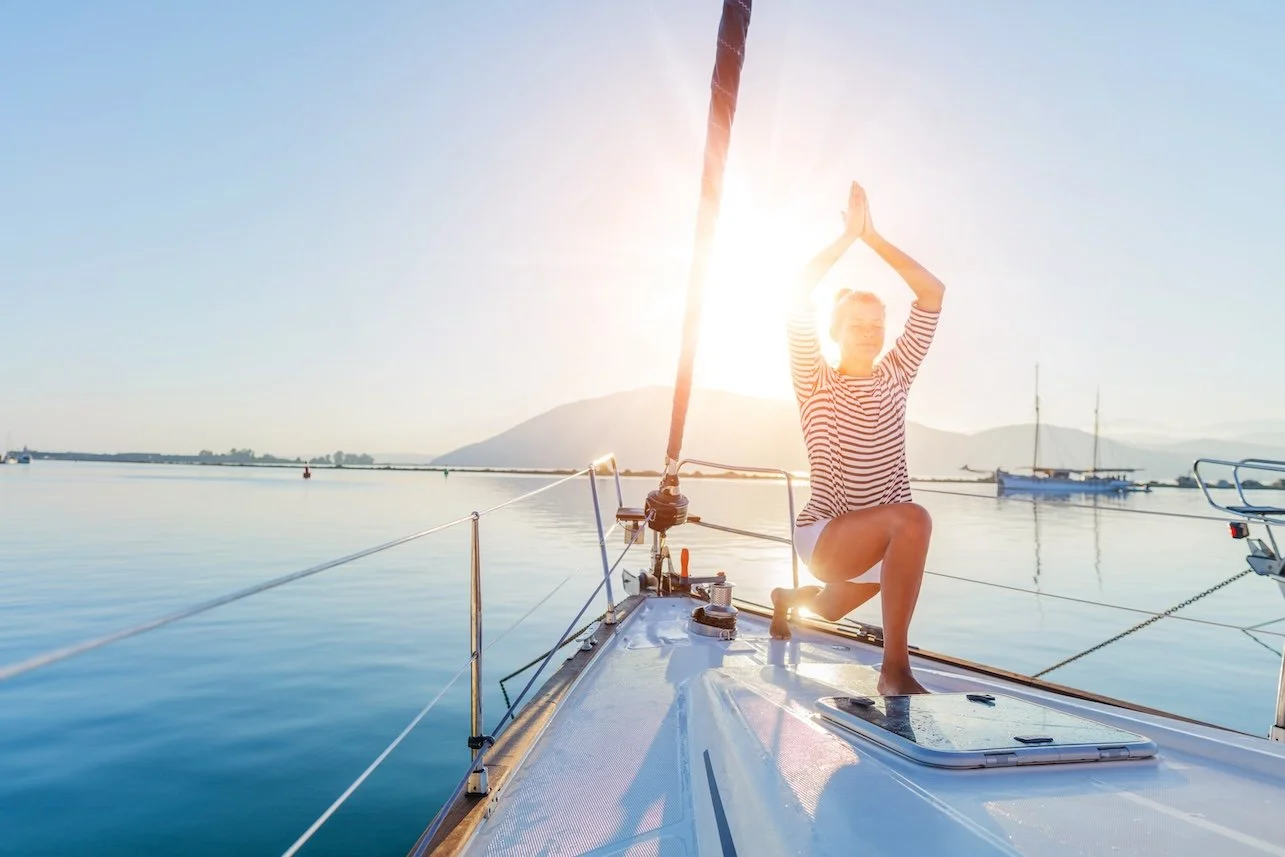
Kneel on the floor and step forward with one foot. Raise your hands slowly or place them on the deck for support. Lunges stretch hips and legs without having to balance to finish a standing pose. It’s best to avoid deep backbends, inversions, arm balances, and jumping movements while on a boat. Don't attempt this yoga pose on a boat if you can’t perform it safely on solid ground. Always remember that a boat will move and be sure to use a padded mat for traction and protection.
6. Boat Pose
Few yoga poses are as appropriately named for the occasion—Boat Pose is especially memorable when your yoga mat is on an actual boat. Sit back on your heels with your feet flat on the deck of the boat. Allow your butt to fall back slightly while maintaining a straight back. Lift your feet only when the boat is steady. Ease into it and grab onto the boat if you start to fall. Place your feet back down should the water become unruly.
Practice Yoga Safely and Mindfully on the Water
A boat yoga retreat shouldn't look like your typical flow class. Begin with seated movements and poses that keep your body low to the ground. After a few minutes of deep breathing and meditation on a boat, students can slowly transition into kneeling or standing poses if conditions allow. If someone needs support while practicing, make sure they hold onto something secure that isn't connected to boat controls.
Examples of unsafe poses on a boat include:
Advanced arm balances
One-legged poses
Deep backbends
Poses that have participants jump or use momentum to transition
Any pose practiced near the edge of the boat
Whenever students become uncomfortable, or water conditions change, that's your cue to pause and sit down. Don't ever force someone to participate or push too hard during your session. As the boat operator, stay docked up at all times and pay extra attention to changing wind, current, or storms nearby, plus other boats and water traffic. Boat operators should never participate in yoga on a boat session or put anyone in harm's way by paying more attention to yoga than the surroundings.
Pontoon Rentals for Yoga Retreats on the Water
Do it once and you’ll see why everyone falls in love with yoga and boating. Your boat membership allows you to tailor every day on the water to your group’s needs. Maybe you’ll try an outdoor yoga retreat at a lake you’ve never visited before, squeeze your session in before sunrise (when everyone else is asleep), or allot plenty of time for your group to take on whatever relaxing activities on a boat they desire that day.
Dreaming about planning a yoga retreat for your group of five? Or perhaps you’re just after some serene wellness boating experiences alone? Reserve your next boating day and plan your route before you hit the water.